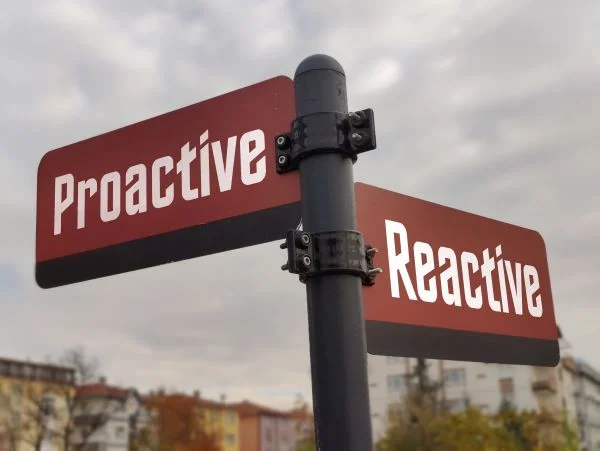
What if the real competitive advantage isn’t how fast you can fix problems but how early you see possibilities? We often see companies struggling to tame the sometimes overwhelming burden of problems. They profess they want to become better at problem solving. That’s all well and good – but wouldn’t a better goal be avoiding problems altogether so that you can apply your resources to creating a better future?
Most leaders say they want to be proactive – but day-to-day realities often pull them into firefighting mode. What if proactive leadership wasn’t about doing more, but about thinking differently? By thinking about opportunities strategically and using structured thinking tools like Potential Opportunity Analysis, organizations can start seeing what others miss: hidden customer value, untapped potential, and the next wave of value creation before it’s obvious to everyone else.
Opportunity thinking isn’t a brainstorm. It’s a discipline.
Value creation: missing value in everyday work
In most companies, value creation is reactive: a new customer need, a market shift, a productivity gap. But leaders at companies like Procter & Gamble and Amazon have shown that proactive opportunity identification can yield outsized returns.
Proctor & Gamble’s Connect + Develop program systematically sought external innovations before customers asked for them – resulting in more than 50% of product initiatives using external ideas. Working in collaboration, they identify key insights, business models, technologies, and capabilities that create disruptive innovative solutions.
Amazon Web Services wasn’t built in response to failure, but opportunity: engineers saw that developers needed scalable infrastructure and acted early. Initially, teams were rebuilding basic infrastructure components repeatedly, leading to inefficiencies. This sparked the idea of a shared infrastructure, and eventually, the concept of offering these capabilities as a service to external customers. Now it’s a $90B business.
The lesson? Opportunities don’t shout. They whisper. And companies with the strategic thinking tools to hear them move ahead.
What is Potential Opportunity Analysis?
Potential Opportunity Analysis (POA) is Kepner-Tregoe’s method for:
- Surfacing potential gains – where could we generate more value for customers or for the business?
- Clarifying the conditions for success – what must be true for this to succeed?
- Assessing benefits vs. costs – is this worth it now, later, or never?
- Mitigating risk – what could go wrong if we act? And what if we don’t?
- Driving ownership – who will lead? What’s the next step?
Potential Opportunity Analysis helps leaders avoid the trap of reactive “busy-ness”. It builds a culture where teams look forward, not just around.
Explore our 1-day training program for executive leaders to get started.
Why proactive leadership matters now?
In uncertain markets, companies that wait to act lose share to those who act on foresight.
According to a 2023 Bain & Company report, companies that invested during downturns outperformed peers by more than 17% over the next growth cycle. Opportunity thinking isn’t about optimism, it’s about positioning.
Strategic thinking gives organizations:
- Faster time to innovation
- Stronger alignment across functions
- A robust pipeline of value-generating initiatives
- Increased resilience in volatile markets
Before you launch your next fire drill … ask:
- What opportunities are emerging for our customers?
- Where are we leaving value on the table?
- What must happen to make this real?
Don’t just fix problems. Find the upside.